
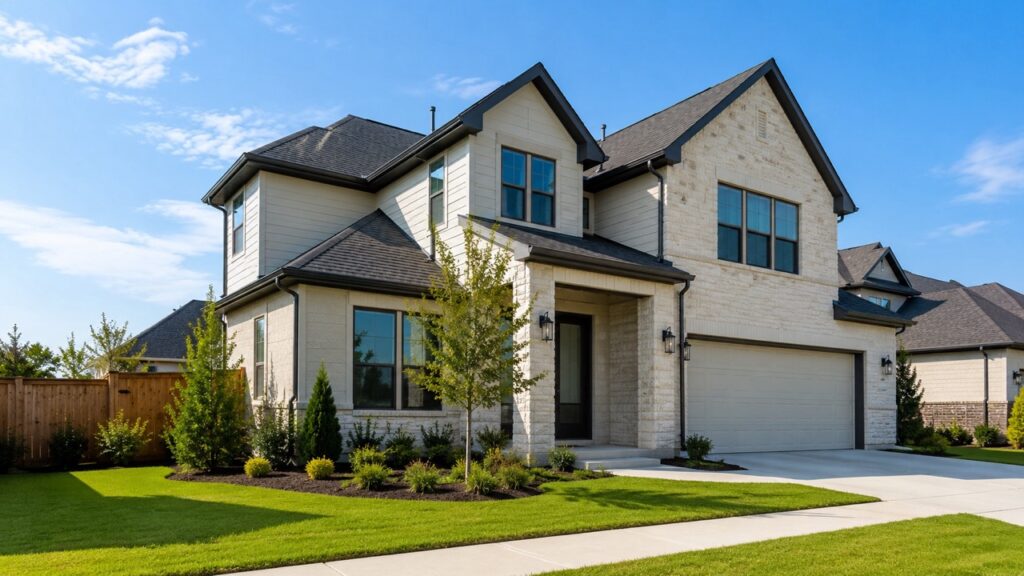
If you bought a newer home in the 77406 area west of Richmond, you probably expected the air conditioning to be one thing you wouldn’t have to think about for years. So it can be frustrating—and a little confusing—when a home that’s only a few years old already has rooms that won’t cool, airflow that feels weak, or a system that seems to run longer than it should.
Here’s the reassuring part: this usually doesn’t mean something is broken, and it rarely means you bought a “bad” house. In many newer Fort Bend County homes, comfort problems trace back to how the system was selected, installed, and set up during construction—not to age or wear. And because these issues are about design and configuration rather than failing parts, many of them can be improved without major expense.
Understanding why new homes can still struggle with cooling helps you know what’s worth addressing and what’s simply how the system was built.
Why New Homes Aren’t Immune to AC Problems
It’s easy to assume that “new” means “trouble-free.” But a new air conditioning system is only as good as the design and installation behind it.
In fast-growing communities like those across 77406, homes are often built quickly and in large numbers. HVAC systems are chosen to meet code and budget, sized using general assumptions, and installed on tight construction timelines. None of that is unusual—but it does mean the system may not be perfectly matched to how you actually live in the home.
The result is a system that technically works, yet doesn’t deliver the even, consistent comfort homeowners expect from a newer house.
The Reality of Builder-Grade HVAC Systems
When a home is built, the HVAC equipment is typically selected to be reliable and cost-effective at scale—not customized for each buyer. This is what people mean by “builder-grade.”
Builder-grade systems aren’t necessarily low quality, but they often come with trade-offs:
- Standardized sizing rather than equipment matched to your specific layout and sun exposure
- Basic thermostats and controls with limited ability to manage comfort across the home
- Single-stage equipment that runs at full blast or not at all, instead of modulating to hold steady temperatures
- Entry-level components chosen for value over long-term performance
In a 77406 home with large windows, an open floor plan, or a second story, a basic single-stage system can have a hard time keeping every room comfortable—especially during the hottest part of a Texas afternoon.
How Fast Construction Affects Duct and Airflow Design
In newer homes, the ductwork is installed alongside everything else during a busy build schedule. When construction moves quickly, duct layout sometimes gets simplified to fit the timeline rather than optimized for airflow.
This can show up as:
- Long or sharp duct runs that reduce how much air reaches distant rooms
- Undersized returns that limit how efficiently the system can pull air back to cool it
- Rooms with too few or poorly placed supply vents
- Flex duct that’s kinked, compressed, or sagging in the attic
Unlike older homes—where ductwork has aged and deteriorated over decades—newer homes usually have intact ducts that simply weren’t laid out for ideal airflow. The materials are fine. The configuration is what limits comfort. That’s an important distinction, because it often points toward adjustments rather than replacement.
Common Early Comfort Complaints in 77406 Homes
Homeowners in newer 77406 neighborhoods tend to notice a familiar set of issues once summer arrives.
Rooms That Won’t Cool Like the Rest of the House
Bedrooms far from the air handler, upstairs spaces, and rooms with lots of glass often run warmer. This usually reflects airflow distribution, not a failing system.
A System That Runs Longer Than Expected
Longer cooling cycles in a new home can mean the equipment is working at the edge of its capacity for your layout, or that airflow restrictions are forcing it to run to keep up.
Uneven Comfort Between Floors
Two-story homes are especially prone to a warm upstairs and a cool downstairs when a single system and thermostat are trying to manage the entire house.
Weak Airflow From Certain Vents
When some vents push strong air and others barely register, it’s often a sign of duct layout or balancing issues rather than equipment trouble.
These complaints can feel surprising in a newer home, but they’re common—and most are addressable.
What’s Usually Adjustable vs What Was Built In
One of the most useful things to understand is which comfort issues can be tuned and which are baked into the original design.
Often adjustable:
- Airflow balance between rooms and floors
- Register and damper settings to redirect air
- Thermostat placement and programming
- Return-air improvements
- Minor duct corrections, such as fixing kinked or disconnected flex runs
More fundamental (built in during construction):
- The overall capacity of the installed system
- The core duct routing throughout the home
- Whether the home was set up for single-zone or multi-zone control
The good news for most 77406 homeowners is that a large share of everyday comfort complaints fall into the adjustable category. Before anyone talks about bigger changes, it’s worth seeing how much can be improved through balancing and proper setup.
Getting a New System Dialed In for Long-Term Comfort
A newer home gives you a real advantage: the equipment and ducts are in good shape, so the focus can be on optimizing what’s already there rather than replacing it. The goal is to make sure the system is configured for how your home actually performs in the Texas heat.
A thorough evaluation of a newer 77406 home generally looks at:
- Airflow balance across rooms and between floors
- Return-air capacity relative to the system
- Duct routing and condition in the attic
- Thermostat placement and control options
- How the system performs under real peak-heat demand, not just on a mild day
From there, the right next steps are usually practical and proportional—adjusting airflow, improving balance, or fine-tuning controls—rather than jumping to expensive changes. The point is to solve the comfort problem you’re actually experiencing, not to upsell a system that’s only a few years old.
If your newer home isn’t cooling the way you expected, you don’t have to live with hot rooms or a system that runs nonstop. In most cases, the issue is fixable once someone takes the time to understand how your specific home behaves.
Honest AC Help for Newer Homes in 77406
At Critical Air, we work with homeowners throughout Richmond and the wider Fort Bend County area, including newer 77406 neighborhoods where comfort problems often come down to design and setup rather than failing equipment. Our focus is on diagnosing what’s actually limiting your comfort and recommending the most practical fix—not pushing replacements you don’t need.
If your newer home has rooms that won’t cool, uneven temperatures, or a system that seems to run too long, we’re here to help you understand why and what can be done about it.
Call Critical Air Today at 281-468-4250
Schedule Your Free AC Repair Sugar Land Evaluation at criticalairhvac.com/contact-hvac-sugar-land-tx